Stacking Credentials, Stacking Earnings: How Savvy Technicians Are Escaping the Flat-Rate Ceiling
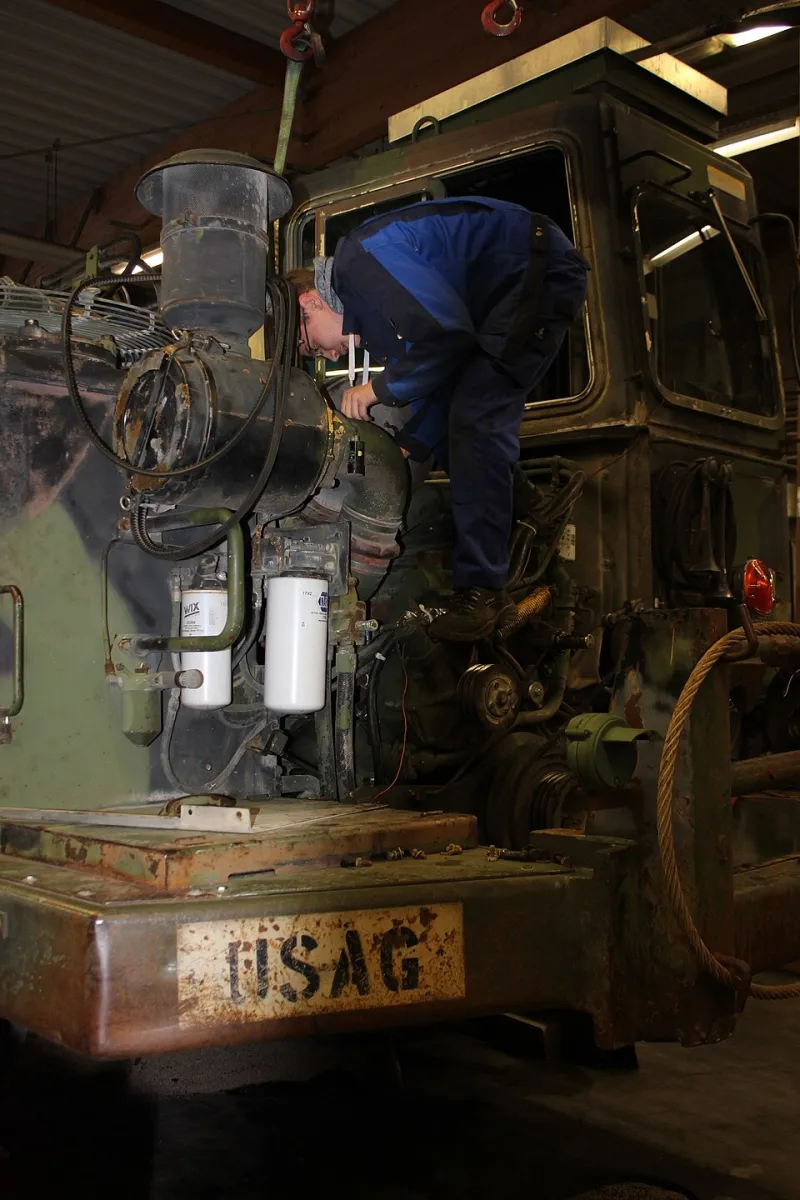
Photo: U.S. Army 405TH-AFSB by Rabia Coombs, Public domain, via Wikimedia Commons
For decades, the flat-rate pay structure has defined life on the dealership shop floor. You work the hours, you bill the hours, and somewhere in the middle, the math either works in your favor or it doesn't. For many technicians, it rarely does — at least not consistently. But a quiet shift is underway, and it is being driven not by union negotiations or industry-wide wage reforms, but by individual technicians who have figured out how to make certifications work as financial leverage.
The strategy is known informally as certification stacking, and it is exactly what it sounds like: the deliberate pursuit of multiple manufacturer-specific credentials across different brands, electric vehicle platforms, and technical specializations. What began as a professional development habit among a small group of forward-thinking technicians has evolved into a recognized career strategy that is drawing attention from dealership groups, regional service managers, and automotive staffing professionals nationwide.
Why Flat-Rate Pay Creates a Ceiling — and Why Credentials Can Break It
Flat-rate compensation rewards speed and volume. Technicians are paid for completed labor hours rather than time spent on the clock, which means that slow jobs, warranty work, and diagnostic complexity can all erode effective hourly earnings. For a technician who has spent years mastering their craft, this structure can feel deeply inequitable — and financially unpredictable.
Manufacturer certifications change that equation. When a dealership employs a technician certified to work on high-voltage electric systems for brands like Tesla or Rivian, or one who holds advanced diagnostic credentials from BMW or Ford's factory training programs, that individual becomes operationally irreplaceable in ways that a generalist is not. Dealerships with EV service obligations, manufacturer audit requirements, or specialized warranty agreements often need certified personnel on staff to maintain their service authorization. That need creates leverage.
Marcus Tillman, a master technician based in the Atlanta metro area who holds certifications across three OEM platforms, describes the dynamic plainly: "When I added my high-voltage certification to my existing Ford and GM credentials, I stopped being someone they could easily replace. I wasn't just fixing cars anymore — I was protecting their ability to service certain vehicles at all. That changes the conversation at review time."
The Certification Landscape in 2024 and Beyond
The credential ecosystem available to working technicians has expanded considerably over the past several years. Traditional ASE certifications remain foundational, but manufacturer-specific programs now offer pathways that are increasingly tied to real compensation outcomes.
Ford's Professional Technician Society program, BMW's STEP training curriculum, and General Motors' Technician Excellence initiative each provide tiered credentialing structures that dealerships are expected to staff to specific levels. Meanwhile, the rapid growth of EV-focused brands has introduced entirely new certification categories. Rivian's service training program, for instance, requires technicians to complete proprietary coursework before they are authorized to perform warranty repairs — a requirement that immediately elevates the value of any technician who holds that credential in a market where Rivian vehicles are growing in number.
For technicians willing to invest the time — and in some cases, the out-of-pocket cost — across multiple programs, the cumulative effect on their professional profile is significant.
From the Shop Floor to Technical Leadership
Certification stacking is not only about wage negotiation. For a meaningful subset of technicians, it has become a deliberate pathway into roles that carry more stability, better benefits, and greater long-term earning potential than traditional flat-rate work.
Shop foreman positions, technical trainer roles, and warranty administrator jobs are increasingly being filled by technicians who can demonstrate multi-platform expertise. These positions often come with salaried compensation, reduced physical demands, and advancement tracks that lead into fixed operations management.
Denise Okafor, who transitioned from a flat-rate technician role at a Midwest dealership group into a regional technical trainer position, credits credential diversification as the turning point in her career. "I had my ASEs, but what opened the door to training was the EV certification I pursued on my own time. They needed someone who could teach the new platform to the rest of the team, and I was the only one on staff who had done the coursework. That became my value proposition."
Warranty specialist positions represent another growing opportunity. As manufacturer warranty claims grow more complex — particularly around software-defined vehicles and EV battery systems — dealerships need personnel who understand both the technical and administrative dimensions of the process. Technicians with broad certification portfolios are well-positioned to move into these hybrid roles, which typically offer base salaries that exceed what most flat-rate technicians earn in an average month.
How to Build a Certification Strategy That Actually Pays Off
Not every credential carries equal weight in every market, and technicians who pursue certifications without a clear strategy may find that the return on their time investment is limited. The most effective approach involves researching the specific vehicle mix and service authorization requirements of dealerships in your target area before committing to a training path.
Several practical considerations are worth keeping in mind:
Prioritize certifications tied to service authorization requirements. If a dealership needs a certified EV technician on staff to maintain its service agreement with a manufacturer, your credential has immediate operational value — not just resume value.
Identify emerging platforms early. Technicians who pursued hybrid and EV certifications several years ago found themselves ahead of the curve when those vehicles began arriving in volume. The same logic applies to emerging brands and technologies entering the US market today.
Negotiate before you certify, not after. Many technicians make the mistake of completing additional training and then hoping their employer notices. A more effective approach is to discuss compensation expectations with your service manager or dealer principal before you invest the time, framing the certification as a mutual benefit.
Document everything. A formal credential portfolio — including completion dates, program names, and manufacturer documentation — is a tangible asset in any compensation negotiation or job search. Treat it with the same care you would a professional resume.
A Structural Shift in How Dealerships Value Technical Talent
The broader industry context matters here. As vehicle technology grows more complex and manufacturer training requirements become more demanding, dealerships are increasingly aware that certified technical talent is a finite resource. Turnover in the service department is expensive, and replacing a multi-certified technician is not simply a matter of posting a job listing.
This dynamic gives credential-stacking technicians a structural advantage that extends beyond any single negotiation. It positions them as long-term assets rather than interchangeable labor — a distinction that tends to translate into better compensation, more scheduling flexibility, and greater access to leadership opportunities over time.
For automotive professionals who have spent years building expertise on the shop floor, certification stacking represents one of the clearest and most actionable paths available to convert that expertise into financial security and career advancement. The tools are available. The demand is real. The question is whether technicians are willing to treat their own credentials with the same strategic seriousness they bring to every repair order.